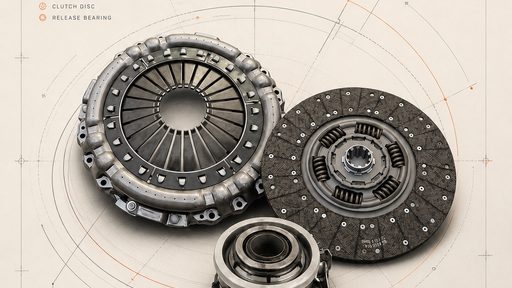


A heavy-duty clutch should be matched as a complete operating system. The clutch disc, pressure plate and release system must work together with the vehicle and transmission. Matching only the outside diameter or choosing parts from the same vehicle brand can leave a buyer with components that look correct but cannot be installed or released correctly.
This guide explains how to compare the three main parts, what information to collect from the removed clutch, and how to prepare a complete product-matching request for a distributor, repair network or fleet purchasing team.
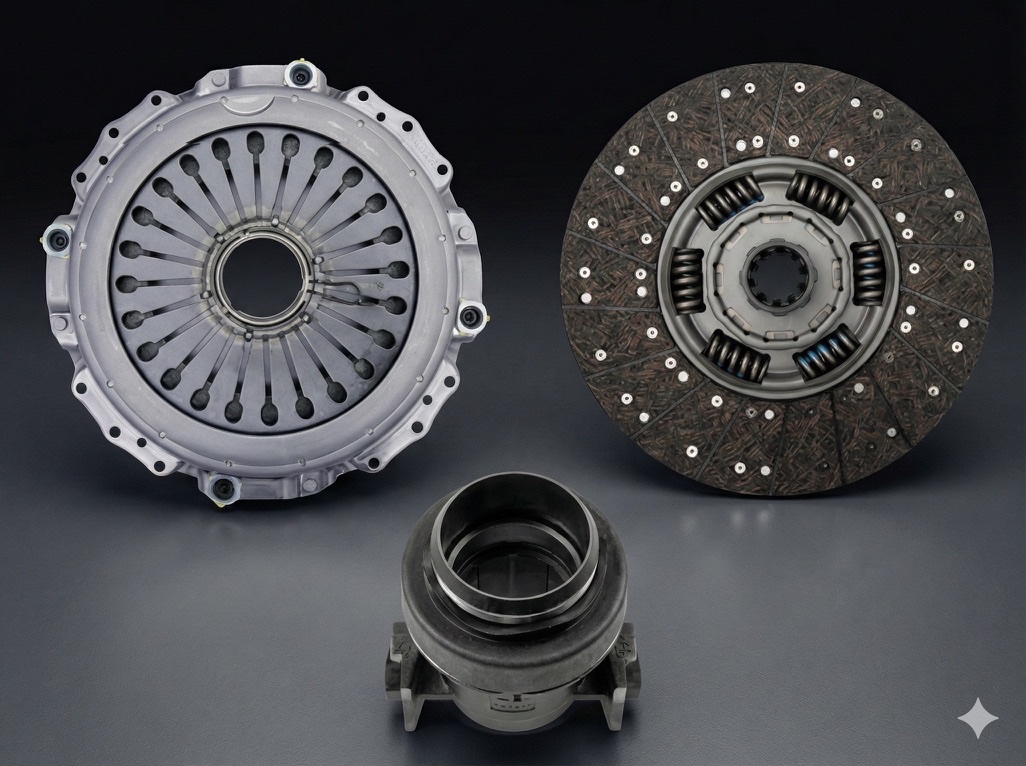
Why the clutch must be matched as a system
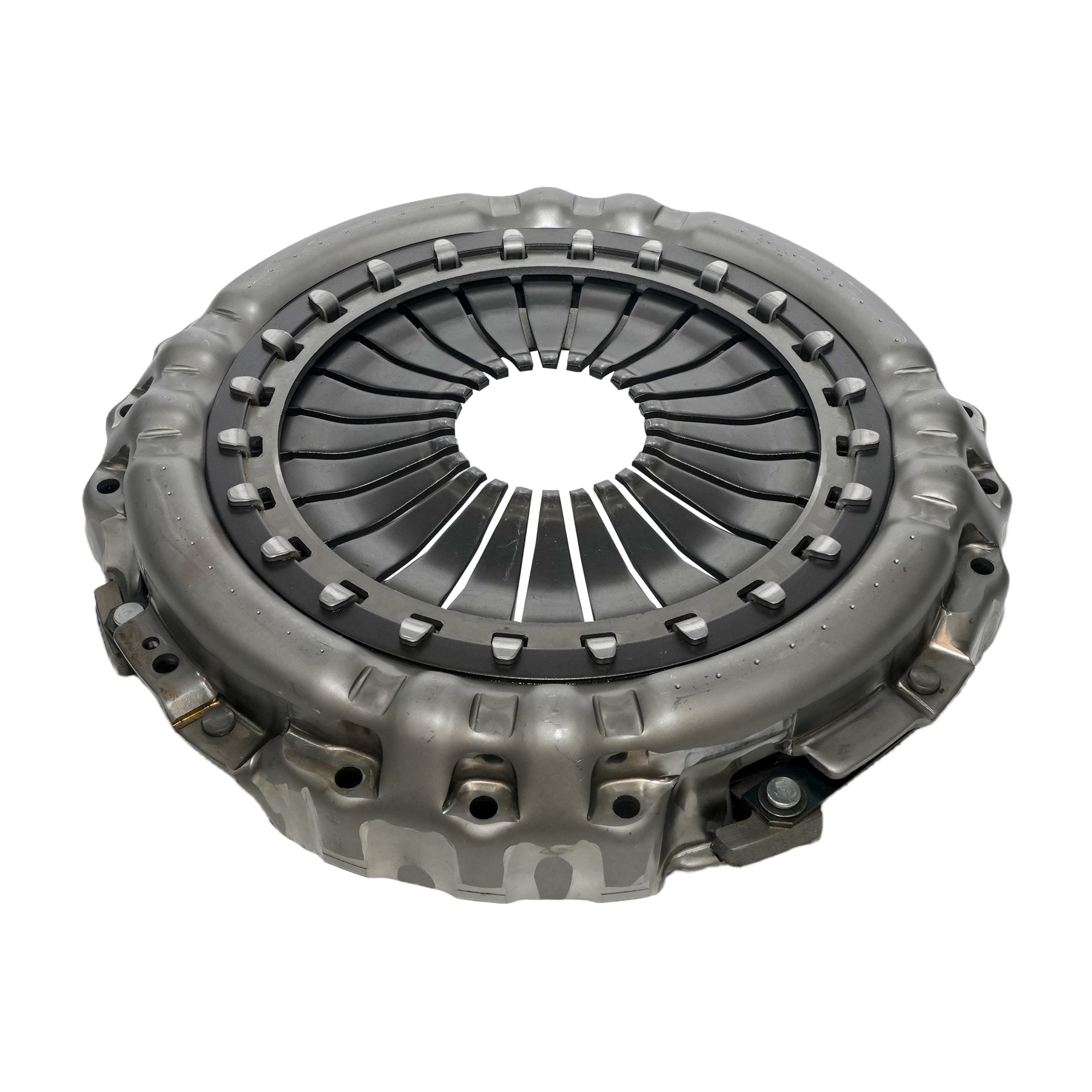
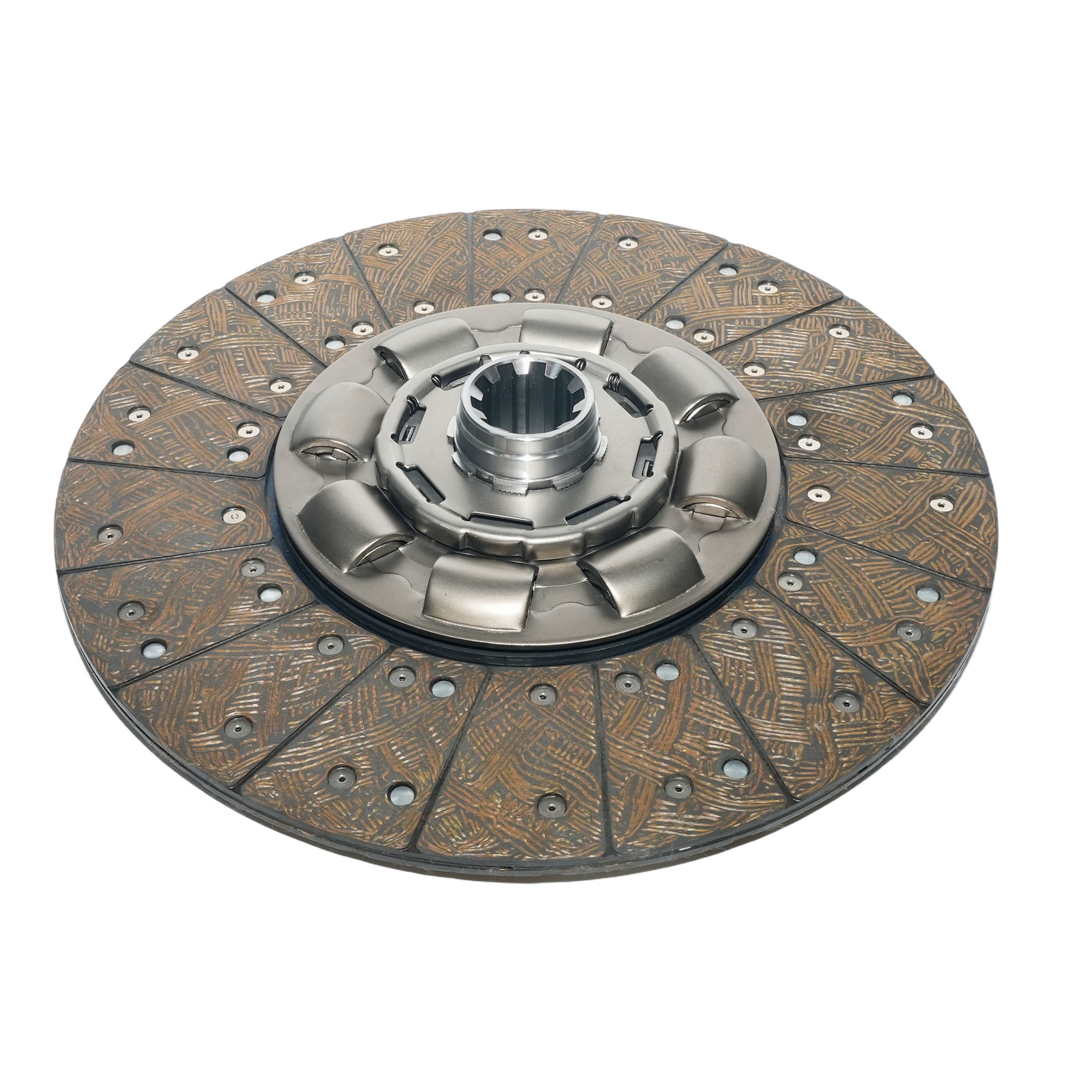
The clutch disc transfers torque through its friction linings and hub. The pressure plate provides the clamping force that engages the disc. The release system separates the disc from the flywheel and pressure plate when the driver operates the clutch.
Each component can be available separately, but the installation depends on their shared dimensions and operating direction. A clutch disc with the correct nominal diameter may still have the wrong spline, hub offset or damper envelope. A pressure plate with a similar outside diameter may use a different mounting pattern, installation height or release direction. A release bearing with the wrong interface or travel may prevent complete engagement or disengagement.
1. Start with the vehicle and transmission
Record the vehicle model, engine, transmission and OE references from every removed component. A vehicle family is useful for narrowing the search, but it is not a complete fitment record. Different engines, transmissions, production periods and operating duties can use different clutch configurations.
Include the operating environment when known. Long-haul, construction, mining and bus applications can place different demands on the clutch system. For a faster technical review, send the vehicle and transmission information together with the product photographs and dimensions.
2. Compare the clutch disc and pressure plate
Check the disc and cover assembly as a pair before comparing price or packaging. The main comparison points are:
- Nominal outside diameter and friction-surface dimensions
- Disc spline tooth count and spline outside diameter
- Hub height, offset and clearance envelope
- Damper spring arrangement and hub orientation
- Pressure-plate mounting pattern and installation height
- Diaphragm, lever or cover configuration
- Push-type or pull-type operating direction
Check the hub orientation carefully. A disc may be designed to face one direction toward the flywheel or pressure plate. Reversing the orientation can create clearance problems even when the diameter and spline appear correct.
3. Confirm the release system
The release system must match the pressure plate and the vehicle control mechanism. Verify whether the clutch uses push-type or pull-type operation, then compare the release-bearing design, mounting interface and required travel.
Also check whether the replacement system uses a concentric release bearing, a conventional release bearing and fork, or another application-specific arrangement. The bearing must be able to contact the pressure plate correctly and move through the required range without bottoming out or failing to release the disc.
When the original release component is missing, include a photo of the transmission input area, the release fork or mounting interface, and any available OE reference. Do not select a release component from diameter alone.
4. Inspect the removed components together
Lay the removed disc, pressure plate and release component together before taking photographs. Photograph the front and back of each part, the hub, the spline, the cover markings, the mounting holes and the release interface.
Record all stamped, engraved or printed references. A cross-reference on one component may not be the primary reference for the complete kit. Keeping the parts together helps a technical team understand which components were operating as a system.
System-matching checklist
| Component | Details to compare | Typical risk when ignored |
|---|---|---|
| Clutch disc | Diameter, lining dimensions, spline, hub offset and damper layout | The disc cannot engage the transmission shaft or has insufficient clearance. |
| Pressure plate | Mounting pattern, cover height, clamp design and release direction | The cover does not mount correctly or cannot clamp and release the disc. |
| Release system | Bearing interface, travel, mounting and push/pull operation | The clutch drags, fails to release or remains partially engaged. |
| Application | Vehicle, engine, transmission and operating duty | A similar catalogue record is treated as a universal fitment. |
What to send for final confirmation
For a complete quotation or sample confirmation, send the OE-number set and clear photographs of every component. Add the measured diameter, spline information, hub dimensions, transmission, quantity, destination country and packaging requirements.
CHUANGJIN’s system-matching guide recommends confirming the complete reference set before quotation. Buyers can also start with the CHUANGJIN OE Search and then send the physical details for review.
Common matching mistakes
- Choosing every component by nominal diameter only.
- Mixing a disc from one clutch family with a pressure plate from another.
- Ignoring push-type or pull-type release operation.
- Failing to check hub orientation and transmission clearance.
- Using a vehicle brand as a blanket fitment guarantee.
- Requesting a quotation without photos of the release interface.
Frequently asked questions
Can I replace only the clutch disc?
Sometimes, but the pressure plate and release system should be inspected at the same time. If the cover is worn or the release mechanism is incompatible, installing a new disc alone may not restore reliable clutch operation.
Is a complete clutch kit always better?
A complete kit can reduce the risk of mixing incompatible components when the disc, pressure plate and release system are supplied as a matched configuration. The kit still needs to be checked against the vehicle, transmission and OE references.
What if the original release bearing is missing?
Send the vehicle and transmission details, photos of the pressure plate and release interface, and any available OE reference. The missing component should be confirmed before ordering the complete system.
Final checklist
Match the clutch disc, pressure plate and release system as one configuration. Confirm the OE references, diameter, spline, hub profile, mounting pattern, release direction, travel and vehicle transmission. This approach gives a B2B buyer a stronger technical record and reduces the chance of receiving parts that cannot work together.
For technical review, send the complete reference set and product photos through the CHUANGJIN contact page.